
Menopause and Bone Loss: How to Protect Your Bones Through Perimenopause and Beyond
June 20, 2026
By Suzette Iverson, PA-C, MPH, MSCP, CHC
Last updated: June 20, 2026. Medically reviewed by Suzette Iverson, PA-C, MPH, MSHS, CHC, MSCP.

Menopause brings many changes to a woman's body, but one of the most important-and often overlooked-is the impact on bone health. As estrogen levels decline during perimenopause and menopause, women can experience accelerated bone loss, increasing their risk of osteoporosis and fractures later in life.
The good news? Understanding what's happening and taking proactive steps can help you maintain strong, healthy bones for years to come.
What Happens to Your Bones During Perimenopause?
Perimenopause is the transitional phase leading up to menopause, often beginning in a woman's 40s, though it can start earlier. During this time, hormone levels fluctuate significantly, particularly estrogen.
Estrogen plays a critical role in maintaining bone density. It helps regulate the balance between bone breakdown and bone formation. As estrogen levels become more erratic during perimenopause, this balance starts to shift.
Early Signs of Bone Loss in Perimenopause
Many women begin losing bone density before they reach menopause. Research shows that bone loss accelerates during the late perimenopausal years, even before menstrual periods stop completely.
During perimenopause:
- Bone breakdown begins to outpace bone formation
- Bone mineral density gradually decreases
- Risk factors for osteoporosis begin to develop
- Muscle mass may decline, affecting balance and increasing fall risk
Because bone loss occurs silently, most women have no symptoms until a fracture occurs or a bone density scan reveals changes.
What Happens to Your Bones During Menopause?
Menopause is officially diagnosed after 12 consecutive months without a menstrual period. At this point, estrogen production drops dramatically.
This decline has a profound effect on bone health.
Rapid Bone Loss After Menopause
Women can lose up to 20% of their bone density during the first five to seven years after menopause. This period represents the most rapid phase of bone loss many women will experience.
Without adequate estrogen:
- Bone resorption (breakdown) accelerates
- New bone formation slows
- Bones become thinner and weaker
- Fracture risk increases significantly
The hips, spine, and wrists are particularly vulnerable to osteoporotic fractures.
Menopause and Osteoporosis Risk
Osteoporosis is a condition characterized by low bone mass and deterioration of bone tissue. According to the National Osteoporosis Foundation, approximately one in two women over age 50 will experience an osteoporosis-related fracture during their lifetime.
Risk factors include:
- Early menopause
- Family history of osteoporosis
- Low body weight
- Smoking
- Excessive alcohol consumption
- Physical inactivity
- Inadequate calcium and vitamin D intake
How to Prevent Osteoporosis During and After Menopause
While some bone loss is a natural part of aging, there are many evidence-based strategies that can help preserve bone density and reduce osteoporosis risk.
1. Prioritize Strength Training
Resistance exercises stimulate bone-building cells and help maintain muscle mass.
Examples include:
- Weight lifting
- Resistance bands
- Bodyweight exercises
- Pilates
- Functional strength training
Aim for at least two to three strength-training sessions per week.
2. Incorporate Weight-Bearing Exercise
Weight-bearing activities force your bones to work against gravity, which helps maintain bone strength.
Examples include:
- Walking
- Hiking
- Dancing
- Tennis
- Stair climbing
- Jogging (if appropriate)
3. Avoid Smoking
Smoking accelerates bone loss and increases fracture risk. Quitting smoking is one of the most important steps you can take for long-term bone health.
4. Limit Excessive Alcohol Consumption
Heavy alcohol use can interfere with calcium absorption and bone remodeling. Moderation is key.
5. Get a Bone Density Scan When Appropriate
A DEXA scan measures bone mineral density and helps identify osteopenia or osteoporosis before fractures occur.
Women should discuss bone density screening with their healthcare provider, especially if they have risk factors or are entering menopause. It can be helpful to know your baseline bone mineral density before heading into late perimenopause or early menopause, when we see a rapid decline in bone density.
How Much Calcium and Vitamin D Do You Need?
Calcium and vitamin D work together to support healthy bones.
Calcium Requirements for Women
The National Institutes of Health recommends:
- Women ages 19-50: 1,000 mg calcium daily
- Women age 51 and older: 1,200 mg calcium daily
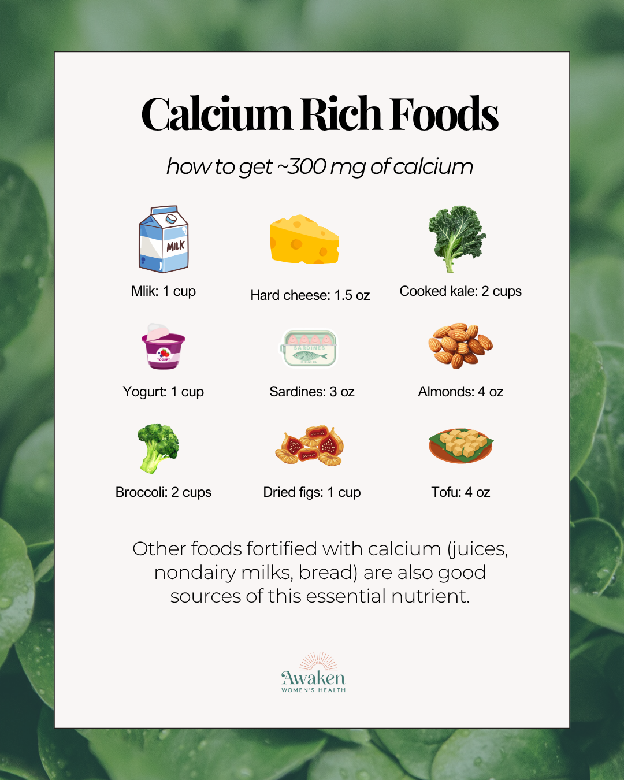
Good dietary sources include:
- Dairy products
- Yogurt
- Cheese
- Fortified plant-based milks
- Sardines
- Salmon with bones
- Tofu made with calcium
- Leafy green vegetables
It's generally best to obtain calcium through food whenever possible. One helpful trick is to estimate your daily intake from food, and then take a supplement to bring your total intake to 1,200 mg daily.
Vitamin D Requirements for Women
Vitamin D helps your body absorb calcium effectively.
Current guideline recommendations include:
- Ages 19-70: 600 IU daily
- Age 71 and older: 800 IU daily
However, I always recommend individualized supplementation based on blood levels and risk factors. Many women entering menopause are found to have insufficient vitamin D levels, making testing and supplementation important considerations.
Sources of vitamin D include:
- Sunlight exposure
- Fatty fish
- Egg yolks
- Fortified foods
- Supplements
How Estrogen Can Help Your Bones
Estrogen is one of the body's most powerful protectors against bone loss.
Estrogen's Role in Bone Health
Estrogen helps:
- Slow bone breakdown
- Preserve bone mineral density
- Maintain bone strength
- Reduce fracture risk
When estrogen levels decline during menopause, the rate of bone loss increases substantially.
Hormone Therapy and Bone Protection
Menopausal hormone therapy (MHT), sometimes called hormone replacement therapy (HRT), is FDA-approved for the prevention of osteoporosis in women at elevated risk.
Research consistently shows that estrogen therapy can:
- Slow or prevent bone loss
- Increase bone density
- Reduce the risk of spine and hip fractures
Hormone therapy may be particularly beneficial for women who are experiencing bothersome menopausal symptoms such as hot flashes, night sweats, sleep disruption, and vaginal dryness, while also seeking bone protection.
The decision to use hormone therapy should always be individualized and made in consultation with a qualified healthcare provider who can assess your personal risks and benefits.
When Should You Talk to Your Healthcare Provider?
You should discuss bone health with your healthcare provider if you:
- Are entering perimenopause or menopause
- Have a family history of osteoporosis
- Have experienced a fracture after age 50
- Have low body weight
- Take medications that affect bone density
- Are considering hormone therapy
Early intervention can make a significant difference in preserving bone strength and preventing future fractures.
The Bottom Line
Bone loss begins earlier than many women realize-often during perimenopause-and accelerates after menopause due to declining estrogen levels. Fortunately, osteoporosis is not an inevitable part of aging.
By prioritizing strength training, weight-bearing exercise, adequate calcium and vitamin D intake, and discussing hormone therapy and bone density screening with your healthcare provider, you can take meaningful steps to protect your bones and maintain your independence for years to come.
Strong bones are built through consistent habits-and it's never too early or too late to start investing in your bone health.
Ready for Support?
If you are navigating perimenopause or menopause and want a more personalized plan for protecting your bones, Awaken Women's Health is here to help. We provide individualized menopause care for women in Washington and Utah through personalized telehealth visits.
Schedule a consultation to discuss your symptoms, risk factors, and treatment options for long-term bone health.